
FFC Replaces AFFF, Dry Chem, Gasses, & Water
The Most Advanced Firefighting Technology in the World!
FFC Replaces AFFF, Dry Chem, Gasses, & Water
The Most Advanced Firefighting Technology in the World!
The Most Advanced Firefighting Technology in the World!
The Most Advanced Firefighting Technology in the World!
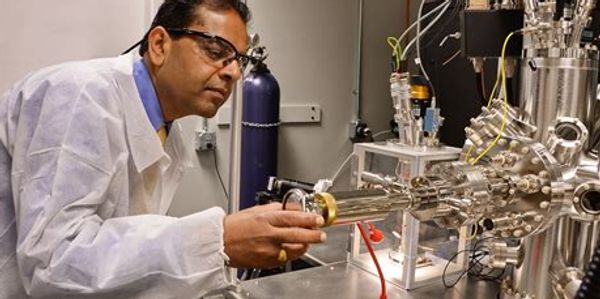

The Catalyst Makes a Physical Change to Any Material
to Eliminate and Prevent Combustion

Certified by Third Parties to be
Safe for Humans and the Environment.
No PFAS! EPA 1633 Method Tested - Fluorine-free
Certifications Available Upon Request
Environmental, Corrosion, Marine, & Medical

Extinguishes Any Material Safer and Quicker. Including Wood, Plastic, Metals, Fuels. and Grease.
For Lithium-Ion Batteries, Submerge in a Premix FFC


3 Methods to Extinguish Fire:
Eliminate
Water Reduces Heat. However...
Fuel & Metal Fires Burn So Hot that Often Water Explodes.
(FFC) Quickly Lowers Heat Below Ignition Point,
Rendering Fuel Sources Non-flammable
While Fully Remediating Smoke And Toxins.
Quick Means Less Toxic Exposure Time for
First Responders

Stop Fighting Fires. Instead Start Stopping Fires Quickly!

Forty Years Later That Dream Was Realized Using Quantum Chemistry!
“…applications of known scientific principles are entirely feasible and it is believed that someday enough knowledge concerning this mysterious and fascinating world of catalysts will be accumulated to solve each of the problems involved. Our hope for this lies in the open mind, the eager spirit, the insatiable curiosity, the painstaking scientific approach, of the young men in the fire service and the research laboratories of the future. In that day and age the fire service may move out of the fire stations and into the laboratory to take its rightful place beside the scientists. Its members may then serve the citizens primarily in the capacity of inspectors and investigators whose duty it will be to see that no outbreak of fire occurs.
Employed in this way, the future fire service engineer could well be described in the words of Dryden:
“Happy the man who, studying nature’s laws through known effects, can trace the secret cause.”
” CATALYSTS AND THEIR RESULTING ACTION called catalysis play an important part in our daily lives. While we are not aware of this influence, it nevertheless extends to innumerable phases of our existence. Without catalysts, many of our everyday products would be impossible, or at least, less common. Consider fertilizers, explosives and industrial chemicals which depend upon nitrogen as their main ingredient. The manufacture of these substances is made possible by the use of catalysts to “fix” atmospheric nitrogen and to prepare synthetic ammonia, as well as nitric acid. Another case in point is the catalytic cracking of petroleum to produce high-grade gasoline. Production of synthetic rubber, sulfuric acid, plastics, dyestuffs, synthetic shortening (Crisco, etc.) further illustrates this application. Even our digestive processes depend upon the operation of a group of catalysts called “enzymes,” without which foods such as starch, proteins, and oils could not be absorbed by our bodies. “
“There is no doubt of the importance of catalysts to the average person. To the fire protection engineers, to those in the fire service, they become so much more important, because the very existence of their occupation concerns itself with the outbreak of fire and explosion, both of which could well be impossible without catalysis. On the other hand, catalysis plays an important part in the control of this very adversary, as we shall see later in this discussion.”
“It is the purpose of this article, then, to consider some basic information concerning catalysts and their actions as they affect our profession, so that this knowledge may be applied to solving some of the problems in the struggle to protect life and property from the ravages of fire.”
A Revolutionary Certified "GREEN" Solution for Preventing and Eliminating Combustion of Any Material Including Nuclear
For centuries, humanity has relied on water as the primary agent for combating fire, yet evolving risks and industrial demands have repeatedly exposed its limitations. The introduction of Aqueous Film-Forming Foam (AFFF) addressed hydrocarbon fires but carried severe environmental and health consequences, leading to its global ban in 2021. Subsequent fluorine-free (F3) alternatives have fallen short, leaving industries, governments, and communities vulnerable to catastrophic fires.
FFC Technology represents a breakthrough "GREEN" innovation developed over more than 30 years of research. Utilizing advanced principles of quantum chemistry, this non-toxic, environmentally benign agent extinguishes and prevents combustion across all classes of flammable materials. It outperforms legacy solutions in efficacy, safety, and economics while integrating seamlessly with existing equipment and infrastructure. FFC delivers universal fire protection without the trade-offs of toxicity, material damage, or environmental harm, positioning it as the definitive next-generation solution for fire safety worldwide.
Since before the Industrial Revolution, water has served as the default medium for firefighting. While effective for many ordinary combustibles, its limitations became evident with the rise of industrial-scale fires involving liquid hydrocarbons and other specialized risks. The commercialization of dry-chemical extinguishers provided a portable option, but water retained dominance due to availability and cost.
In the mid-20th century, AFFF emerged as a specialized solution for hydrocarbon fires, where plain water proved largely ineffective. This foam became the industry standard until mounting evidence of its persistent environmental persistence, bioaccumulation, and toxicity to human and ecological systems prompted a worldwide ban in 2021. The resulting gap spurred rapid development of F3 (fluorine-free) foams. However, these replacements have demonstrated inconsistent performance, failing to match AFFF’s effectiveness while introducing their own limitations—issues clearly documented in safety data sheets and reflected in persistent high destruction rates from major fire incidents. to its global ban in 2021. Subsequent fluorine-free (F3) alternatives have fallen short, leaving industries, governments, and communities vulnerable to catastrophic fires.
Despite decades of advancement, the fire protection sector continues to grapple with systemic challenges:
The consequences are evident in fire statistics: total destruction remains the common outcome for major hydrocarbon fires, wildfires, lithium-ion battery incidents (Class D), kitchen fires, and vehicle-related blazes. Affordable, effective protection for the general public in high-risk everyday scenarios remains elusive.
FFC Technology is the culmination of over three decades of dedicated research and market analysis. The objective was clear: create a single, reliable agent that is:
This goal has been achieved and independently validated by leading third-party testing and certification laboratories in the United States and Europe.
At its core, FFC leverages quantum chemistry to engineer molecular interactions that interrupt the combustion process at a fundamental level—preventing ignition and rapidly extinguishing established fires. Protected as a trade secret (following the precedent of iconic liquid formulations), FFC remains unmatched; no competing technology has replicated its performance breadth or safety profile.
Unlike fragmented legacy products, FFC functions as a stand-alone, universal solution. It excels not only in fire suppression but extends superior performance into adjacent fields, setting new benchmarks across multiple industries.
FFC Technology’s versatility enables deployment across diverse sectors:
Industrial & Energy
Transportation & Military
Medical & Specialized
Additional applications continue to emerge as organizations recognize FFC’s broad-spectrum capabilities:
Adoption of FFC Technology yields substantial advantages:
Cost Efficiency: Lower overall consumption, reduced product variety, and decreased downtime translate into significant long-term savings.
These benefits collectively deliver superior protection while reducing total cost of ownership and regulatory compliance burdens.
The ban on AFFF and the shortcomings of current alternatives have left critical vulnerabilities in global fire protection. FFC Technology fills this void with a genuinely "GREEN", high-performance solution grounded in advanced science and proven through rigorous independent validation.
By preventing and eliminating combustion across any material, FFC offers a unified, responsible path forward—one that prioritizes human safety, environmental stewardship, and operational excellence. Organizations seeking to modernize fire protection strategies, reduce risk, and achieve meaningful sustainability goals should evaluate FFC as the foundational technology for the future.
For further technical specifications, case studies, or implementation discussions, contact the FFC development team. info@firefightingcatalyst.org
*This white paper is based on verified performance data and third-party certifications. **FFC Technology is protected intellectual property..

Our Goal is to Detect and Extinguish Fire at its
Earliest Stage Using Smart Technology.
Ten Minutes From Detection to Extinguishment

Similar to Air Pollution in the 60's, Legislation is Needed to Fix Our Fire Problem!
Mandate the use of a Firefighting Catalyst to Prevent the Harmful Release of Carbon and Toxic Carcinogens into Our Environment!